Veneers vs. Crowns: The Cosmetic Differences Explained
Posted on 7/8/2026 by Singing River Dentistry - Muscle Shoals |
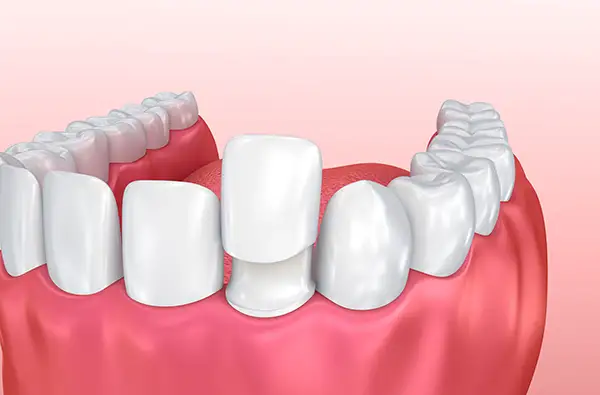 When patients in Muscle Shoals ask us about veneers vs. crowns for a cosmetic fix, the answer almost always comes back to one question: how much of the tooth actually needs to be covered? Both veneers and crowns can transform the look of a smile, and in skilled hands both look beautifully natural. They are designed to solve different problems, though, and choosing the right one matters as much for long-term tooth health as it does for appearance. When patients in Muscle Shoals ask us about veneers vs. crowns for a cosmetic fix, the answer almost always comes back to one question: how much of the tooth actually needs to be covered? Both veneers and crowns can transform the look of a smile, and in skilled hands both look beautifully natural. They are designed to solve different problems, though, and choosing the right one matters as much for long-term tooth health as it does for appearance.
If you have been researching cosmetic dentistry options and bumping into both terms, this guide will help you understand the real differences between the two, when each one is the appropriate choice, and what to expect from the conversation with your dentist.
The short version: a veneer covers only the front surface of a tooth and is primarily a cosmetic solution. A crown covers the entire visible tooth and is primarily a restorative solution that also looks natural. The rest of this post unpacks what that distinction means in practice.
On This Page
What a Dental Veneer Does
Dental veneers are thin shells, most often made of porcelain or composite resin, that are bonded to the front surface of a tooth. Think of one as a custom-made facing that changes how the tooth looks without changing what is underneath. Most porcelain veneers are about 0.5 millimeters thick, roughly the thickness of a contact lens, and they cover only the visible front portion of the tooth.
To place a veneer, the dentist typically removes a small amount of enamel from the front of the tooth so the veneer sits flush with the natural smile line. The preparation is minimal compared with a crown, and in some cases with very thin no-prep options, almost no enamel needs to be removed at all. Once the veneer is bonded in place, it functions as part of the tooth.
Veneers are designed for healthy teeth with cosmetic concerns. The most common reasons we recommend them include:
| • |
Stubborn discoloration – intrinsic stains from medication, trauma, or aging that will not respond to whitening
|
| • |
Minor chips and worn edges – small structural imperfections that affect appearance but not function
|
| • |
Slight gaps and small shape irregularities – closing narrow spaces or evening out a smile line
|
| • |
Mild crowding or rotation – cosmetic correction for adults who do not want orthodontic treatment |
Well-cared-for porcelain veneers typically last 10 to 15 years or longer, and many patients keep theirs even longer with regular checkups and good daily habits.
What a Dental Crown Does
A dental crown is a full-coverage cap that fits over the entire visible portion of a tooth, from the gumline up. Where a veneer covers only the front, a crown wraps all the way around.
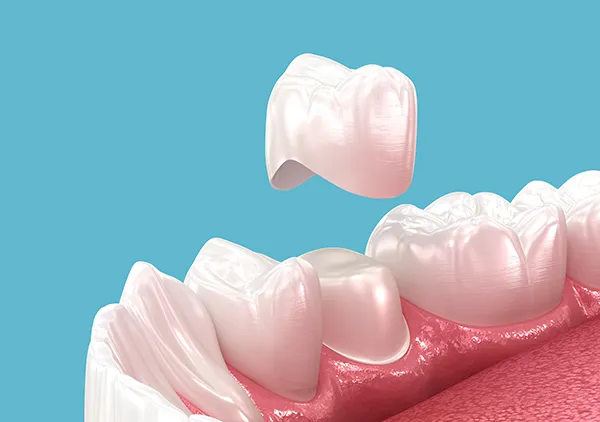 Because the crown surrounds the tooth completely, it can do something a veneer cannot: protect and reinforce a tooth that has been substantially weakened. Placing a crown requires more tooth preparation than a veneer, since the dentist reshapes the tooth on all sides so the crown can fit over it securely. That is not a downside in the situations where a crown is genuinely needed; the reshaping is the trade-off for the protection a full cap provides. Because the crown surrounds the tooth completely, it can do something a veneer cannot: protect and reinforce a tooth that has been substantially weakened. Placing a crown requires more tooth preparation than a veneer, since the dentist reshapes the tooth on all sides so the crown can fit over it securely. That is not a downside in the situations where a crown is genuinely needed; the reshaping is the trade-off for the protection a full cap provides.
Crowns are designed for teeth that have lost meaningful structure or strength. The most common reasons we recommend them include a large existing filling that has weakened the surrounding tooth, a fracture or crack that needs to be held together, significant decay that cannot be restored with a filling alone, a tooth that has had root canal treatment and needs reinforcement, or severe wear from grinding.
Modern crowns can be made from several materials, each with its own strengths. Porcelain crowns and all-ceramic crowns offer the most natural appearance and are the typical choice for front teeth. Zirconia crowns are extremely strong and often used on back teeth where chewing forces are higher. Porcelain-fused-to-metal crowns combine strength with a tooth-colored exterior.
One advance worth knowing about: with CEREC technology, we can design, mill, and place a porcelain crown in a single visit for many patients, which removes the temporary-crown waiting period and the second appointment.
Veneers vs. Crowns at a Glance
Here is the practical difference, broken into the questions patients ask most often.
| • |
Coverage – veneer covers the front only; crown covers the entire tooth
|
| • |
Tooth preparation – veneer requires minimal enamel removal; crown requires significant reshaping of all surfaces
|
| • |
Primary purpose – veneer is cosmetic; crown is restorative and also cosmetic
|
| • |
Best candidate – veneer is for a healthy tooth with appearance concerns; crown is for a weakened or damaged tooth
|
| • |
Strength – both are durable, but a crown protects the entire underlying tooth, while a veneer reinforces only the front surface
|
| • |
Lifespan – both commonly last 10 to 15 years or longer with proper care
|
| • |
Appearance – both can look beautifully natural; porcelain crowns and porcelain veneers are visually difficult to tell apart on a finished smile |
The most important thing to take from this comparison is that veneers and crowns are not competitors. They sit at different points on the same spectrum. Veneers are the conservative cosmetic option for healthy teeth. Crowns are the durable choice when the tooth needs full protection.
When to Choose One Over the Other
Most of the time, the right answer reveals itself once the dentist examines the tooth. Here is the general logic we walk patients through.
When a Veneer Is the Better Choice
If the tooth is healthy and the concern is purely how it looks, a veneer is the more conservative option. Less enamel is removed, the original tooth structure is largely preserved, and the appearance change can be dramatic. Common scenarios include front teeth with deep staining, small chips on otherwise sound teeth, and patients who want a coordinated change across several front teeth at once as part of a complete smile makeover.
When a Crown Is the Better Choice
If the tooth has been weakened by a large filling, fracture, deep decay, or a root canal, a crown is the better long-term choice. The protection a crown provides matters more than the more conservative preparation a veneer would offer, because a veneer cannot reinforce a tooth that has lost significant structure. Choosing a veneer for a structurally compromised tooth often leads to cracks or failure of the underlying tooth later on.
When Both Could Work
There is a middle ground where either option is reasonable. A front tooth with both moderate damage and cosmetic concerns might be a candidate for a veneer if the remaining tooth structure is sound, or for a crown if the dentist judges the tooth needs full coverage to last. In these cases, the conversation matters more than the technology. We look at the X-rays, the existing fillings, how the patient bites, and what they are hoping the result will look and feel like.
Deciding With Your Dentist
A short consultation usually settles the veneers-versus-crowns question quickly. The exam includes a look at the tooth surface, X-rays to see what is happening underneath, and a check of how the upper and lower teeth come together. From there, the dentist can explain which option fits the tooth and why, what the preparation will involve, and what the finished result is likely to look like.
If you are considering cosmetic work on more than one tooth, the conversation can also include whether lightening the surrounding teeth first might produce a more uniform result. Either way, the goal is the same: a comfortable, natural-looking smile that you do not have to think about every time you see a mirror.
Talk to Our Muscle Shoals Team
If you are weighing veneers and crowns for a front-tooth concern, our team at Singing River Dentistry in Muscle Shoals would be glad to walk you through your options in person. Call 256-383-1112 or visit our practice homepage to schedule a consultation.
Frequently Asked Questions
Can a veneer fix a chipped or cracked tooth?
A veneer can cover a small chip or surface crack on an otherwise healthy front tooth. If the crack extends deeper into the tooth or affects the chewing surface, a crown is usually the safer choice because it protects the entire tooth from further fracture.
Do veneers ruin your natural teeth?
Traditional veneers require a small amount of enamel to be removed, which is not reversible. That said, the amount is minimal compared with the preparation needed for a crown. The tooth remains healthy and functional underneath, and the veneer is bonded securely in place for years of normal use.
Are crowns only for back teeth?
Not at all. Crowns are used on front teeth whenever the tooth needs full protection. A porcelain or all-ceramic crown on a front tooth can be made to look indistinguishable from the surrounding teeth.
How long do veneers and crowns last?
With good daily care and regular checkups, both veneers and crowns commonly last 10 to 15 years or longer. Lifespan depends on the materials used, the patient’s bite, and habits like grinding or chewing on hard objects. Wearing a night guard if you grind your teeth is one of the best ways to extend the life of either restoration.
Can a veneer be replaced with a crown later?
Yes. If a tooth with a veneer later develops decay, a fracture, or needs more support, the veneer can be removed and replaced with a crown. This is one reason a veneer can be a reasonable starting point for a tooth that is healthy now but may need more protection in the future.
|
|

