Can You Fix Crooked Teeth Without Braces?
Posted on 3/9/2026 by Singing River Dentistry - Muscle Shoals |
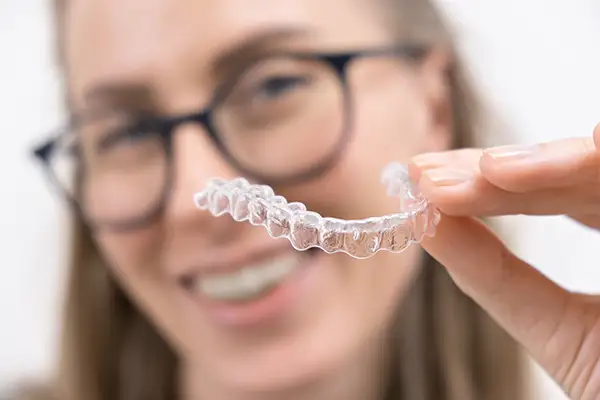 Asking whether you can fix crooked teeth without braces is one of the most common questions adults bring to our cosmetic dentistry consults. The honest answer is yes, in many cases, but the right path depends entirely on how much movement your teeth actually need and what you’re hoping to achieve in the end. Asking whether you can fix crooked teeth without braces is one of the most common questions adults bring to our cosmetic dentistry consults. The honest answer is yes, in many cases, but the right path depends entirely on how much movement your teeth actually need and what you’re hoping to achieve in the end.
In this guide, our Singing River Dentistry team in Muscle Shoals walks through the realistic alternatives to traditional braces, when each one works best, and the cases where braces or a comprehensive orthodontic plan still make the most sense. We’ll cover clear aligners (the closest functional alternative to braces), cosmetic options that camouflage minor crookedness without moving the teeth at all, and the patterns that point toward a full orthodontic evaluation.
Most of these options live under the broader umbrella of cosmetic dentistry, though clear aligners do real orthodontic work. Knowing the difference between actually moving the teeth and changing how they appear is the key to choosing wisely.
On This Page
How to Know Which Option Fits Your Situation
The path that’s right for you depends mostly on two questions: how much do the teeth actually need to move, and what are you trying to achieve? When the goal is genuine alignment improvement (closing gaps, rotating teeth, correcting crowding, fixing a bite), an orthodontic approach is needed. When the goal is purely cosmetic (camouflaging a minor overlap, evening up uneven edges, masking a chip), there are quicker and less involved options that don’t move the teeth at all.
A useful filter is to look at your smile in the mirror and ask three things. How noticeable is the misalignment? Does it bother you in photos and conversation, or only on close inspection? And is there any functional issue (a bite that feels off, food trapping between teeth, jaw discomfort when chewing) that suggests more than appearance is involved?
Answers leaning toward minor and purely cosmetic generally point to camouflage options. Answers involving function, noticeable shifts, or bite concerns typically warrant moving the teeth. Both paths can produce beautiful results when matched well to the situation, and our Muscle Shoals team often discusses both during a single consultation so patients can weigh the tradeoffs honestly.
Clear Aligners: The Closest Alternative to Braces
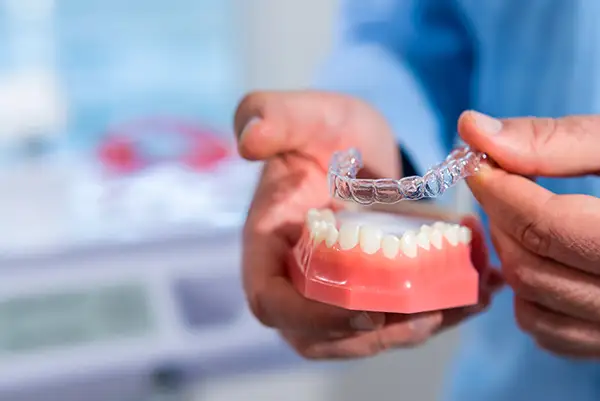 Clear aligners, the most well-known being Invisalign, are the closest functional alternative to traditional braces. Instead of brackets and wires, they use a series of custom, nearly invisible trays that move the teeth in small, planned steps. Each tray is worn for one to two weeks, then swapped for the next in the series, and over the course of treatment (usually 6 to 18 months for most adult cases, longer for complex situations) the teeth gradually shift into the planned position. Clear aligners, the most well-known being Invisalign, are the closest functional alternative to traditional braces. Instead of brackets and wires, they use a series of custom, nearly invisible trays that move the teeth in small, planned steps. Each tray is worn for one to two weeks, then swapped for the next in the series, and over the course of treatment (usually 6 to 18 months for most adult cases, longer for complex situations) the teeth gradually shift into the planned position.
The visible advantage is obvious. The trays are clear, removable, and most people in conversation distance won’t notice them. Removability also makes daily oral hygiene easier than with braces, since brushing and flossing happen normally with the trays out.
What aligners ask of you in return is discipline. The trays need to be in your mouth roughly 20 to 22 hours a day, which means out only for meals, drinks other than water, and brushing. Patients who treat them as optional, or who frequently leave them out for hours at a time, get inconsistent results and often extend their treatment timeline. For motivated adults, that’s usually a manageable tradeoff. For someone who knows they won’t wear them consistently, traditional braces are often a better honest choice.
Aligners handle most mild and moderate cases very well: crowding, spacing, simple rotations, certain crossbites, and many tipped teeth. They struggle more with severe rotations of round teeth like canines, large vertical movements, and significant skeletal bite issues. The planning software shows what kind of movement is realistic in your specific case, and a thorough evaluation will tell you up front whether aligners are the right fit.
Cosmetic Options That Camouflage Crookedness
For patients whose primary concern is appearance rather than function, a few cosmetic options can dramatically improve how a smile looks without moving the teeth at all. These work best on mild irregularities and on teeth that are otherwise healthy.
Veneers
Dental veneers are thin shells of porcelain bonded to the front surface of the teeth. They don’t move teeth, but they can reshape the visible portion of each tooth to create the appearance of a straight, even, well-proportioned smile. For minor overlaps, slight rotations, small gaps, and uneven edges, veneers can produce a striking transformation in two visits. The tradeoff is that they require a small amount of enamel to be reduced before placement, and once that’s done, the tooth typically needs to stay in a veneer or crown long-term. Veneers are best suited to adults whose bite is stable and whose crookedness is genuinely minor.
Dental Bonding
Dental bonding uses a tooth-colored composite material that’s shaped and hardened directly on the tooth. For small chips, narrow gaps, and slight irregularities at the edges of front teeth, bonding can deliver real cosmetic improvement in a single visit, often without removing any enamel. It’s the most conservative of the cosmetic options. The tradeoff is durability. Bonding doesn’t hold up to heavy chewing forces or grinding the way porcelain does, and it’s more prone to staining over time. Many patients use bonding as a starting point and graduate to veneers if and when they want more longevity.
Tooth Recontouring and Reshaping
For very minor cosmetic concerns, like a single edge that looks slightly longer than its neighbor or a small pointed corner that draws the eye, tooth recontouring and reshaping can make a meaningful difference with no anesthesia, no recovery, and often a single short appointment. We gently smooth and reshape the enamel by tiny amounts. The change is permanent and works only within the existing enamel, so the suitable cases are limited, but for the right patient it’s the most efficient option available.
When Braces or Full Orthodontics Still Make Sense
Despite the appeal of aligners and cosmetic options, several patterns still call for traditional braces or a comprehensive orthodontic plan, sometimes coordinated with an orthodontist. These are the situations where shortcuts tend to disappoint:
| • |
Severe crowding – Teeth significantly overlapping or rotated to the point that aligners can’t grip them efficiently.
|
| • |
Complex bite issues – Deep bites, open bites, and significant crossbites that involve how the upper and lower arches relate to each other.
|
| • |
Skeletal misalignment – When the jaws themselves are out of position, which may need surgical-orthodontic coordination in addition to braces.
|
| • |
Significant rotations of round teeth – Canines in particular can be difficult for aligners to rotate predictably.
|
| • |
Extensive vertical movement – Intruding or extruding teeth a meaningful distance, which braces typically handle more reliably. |
For some patients the right answer is a hybrid. Braces or aligners get the teeth into position, then a smile makeover using veneers or bonding refines the final appearance. The combined plan often produces a better result than either approach alone when the starting point is significantly misaligned.
Talking to Your Dentist About Your Options
A consultation is the only reliable way to match an option to your specific smile, bite, and goals. If you’ve been wondering about straightening your teeth without traditional braces, our Singing River Dentistry team in Muscle Shoals is happy to walk you through the realistic possibilities for your situation. Call 256-383-1112 or visit our practice homepage to set up an evaluation.
Frequently Asked Questions
How long does Invisalign treatment usually take?
Most adult Invisalign cases run between 6 and 18 months, depending on how much movement is needed. Simple alignment refinements may finish in as little as 6 months, while comprehensive cases with bite correction can take a year or more. The treatment plan built at the start gives a realistic estimate for your specific situation.
Can veneers actually straighten crooked teeth?
Veneers don’t move teeth. They cover the front surface and create the appearance of a straighter smile by reshaping how each tooth looks. For mildly crooked teeth where the bite is stable, the visual result can be excellent. For more significant misalignment, veneers alone may not be enough, and orthodontic movement should usually come first.
Will my dental insurance cover clear aligners?
Coverage varies by plan, but many dental policies include some orthodontic benefit that applies to clear aligners, often with an age limit or lifetime maximum. Our front office can verify your benefits ahead of time so you know what to expect financially before any treatment starts.
Are clear aligners as effective as braces?
For mild to moderate cases, yes, and many patients find them comparable in result while being far more discreet during treatment. For severe crowding, complex bite correction, or certain rotations, traditional braces are still more efficient. A thorough evaluation will tell you honestly which is the better fit for your case.
My teeth shifted back after braces as a teen. Can I just touch them up?
This is very common, and the answer is often yes. Mild relapse after earlier orthodontic treatment frequently responds well to a short course of clear aligners. A quick exam can confirm whether a brief aligner course or a more comprehensive plan is what you need.
|
|

