Best Options for Replacing a Single Missing Tooth
Posted on 12/9/2025 by Singing River Dentistry - Muscle Shoals |
 If you’re weighing the best options for replacing a single missing tooth in Muscle Shoals, AL, you have three solid paths to choose from, and the right one depends on factors specific to your mouth, your health, and your priorities. A single missing tooth might seem like a small issue at first, especially if it’s in the back of the mouth where it isn’t visible. But what happens over time after a tooth is lost is rarely small, and the choice of replacement affects more than just appearance. If you’re weighing the best options for replacing a single missing tooth in Muscle Shoals, AL, you have three solid paths to choose from, and the right one depends on factors specific to your mouth, your health, and your priorities. A single missing tooth might seem like a small issue at first, especially if it’s in the back of the mouth where it isn’t visible. But what happens over time after a tooth is lost is rarely small, and the choice of replacement affects more than just appearance.
At Singing River Dentistry, our Muscle Shoals team walks patients through this decision often. The good news is that there isn’t one universally “best” option. There are three well-established choices, each with real strengths and trade-offs, and the conversation is mostly about matching the right one to your situation.
This article walks through why replacing even a single missing tooth matters, the three main options for doing so, and the factors that usually shape the recommendation. For a deeper look at what happens after tooth loss, the linked resource covers the longer-term picture.
On This Page
Why Replacing One Tooth Matters
The mouth is a connected system. When one tooth disappears, the teeth around the gap don’t hold their positions indefinitely. Over months and years, adjacent teeth gradually drift toward the empty space, and the tooth in the opposite jaw can start to over-erupt because nothing is biting against it. These shifts change the way the bite comes together, which can lead to uneven wear, discomfort, and additional issues down the road.
Bone loss is the other major consequence. The jawbone in the area of the missing tooth no longer receives the stimulation it used to get from chewing forces transmitted through that tooth root. Over time, that bone gradually resorbs, which means there’s less of it available later if you decide to replace the tooth with an implant. How implants prevent bone loss is one of the main reasons this option is so often recommended for patients who are candidates.
Function and appearance are the third part of the picture. A missing back tooth may not be visible, but it still affects how comfortably you chew, which side of your mouth you favor, and how evenly the work gets distributed across your remaining teeth. A missing front tooth has the same long-term consequences plus an obvious cosmetic concern.
The Three Replacement Options
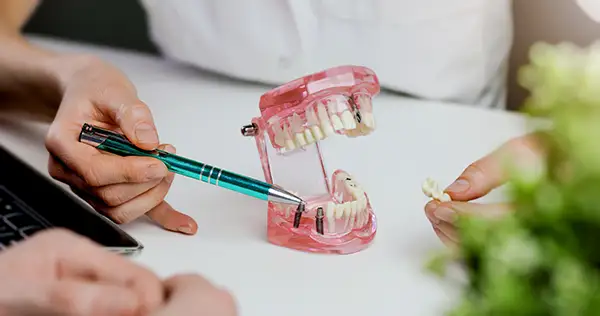 Once you decide to replace the tooth, the conversation usually narrows to three options. Each has been around long enough to have predictable strengths and predictable trade-offs, and patients who understand the differences tend to feel much more confident about the choice they make. Once you decide to replace the tooth, the conversation usually narrows to three options. Each has been around long enough to have predictable strengths and predictable trade-offs, and patients who understand the differences tend to feel much more confident about the choice they make.
Dental Implant
A dental implant is typically considered the closest functional replacement for a natural tooth. The titanium post integrates with the jawbone to act as an artificial tooth root, and a crown is then attached on top to complete the restoration. Implants preserve the surrounding bone because the post continues to stimulate it the way a natural root would. They don’t require altering the neighboring teeth, and the implant itself has the longest expected lifespan of any single-tooth replacement option when properly cared for. The trade-offs are a longer total timeline, the need for a minor procedure, and a higher upfront investment compared to other options.
Dental Bridge
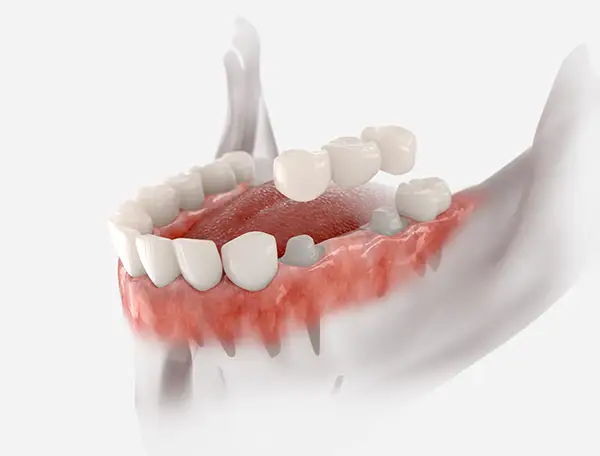
A dental bridge is a cemented restoration anchored to the two healthy teeth on either side of the gap. The replacement tooth (called a pontic) sits in the gap and is supported by crowns placed on the neighboring anchor teeth. Bridges are completed more quickly than implants because no implant placement or bone integration period is involved. The trade-offs are real, though: the neighboring teeth must be prepared (meaning enamel is reduced to support the crowns), and the bridge does not prevent the bone loss that continues underneath the gap. Most bridges last 10 to 15 years before needing replacement.
Partial Denture
A partial denture is a removable appliance that fills the gap using a replacement tooth attached to a base that clasps onto the neighboring teeth. It’s the most affordable entry point, can be made relatively quickly, and doesn’t require any in-office procedure beyond impressions. The trade-offs are noticeable: partial dentures are less stable than fixed options, they need to be removed for cleaning, they don’t feel as natural during chewing, and they don’t prevent bone loss. For a single missing tooth, most patients eventually move toward a fixed solution, though a partial can be a reasonable interim or budget-conscious choice.
Factors That Influence Your Choice
Picking among the three rarely comes down to one variable. The conversation is usually a mix of the following considerations.
Bone health matters most when an implant is on the table. If significant bone has been lost, a graft may be needed first, which adds time and another step. A thorough implant candidacy evaluation usually answers this part of the question with a 3D scan.
The condition of the neighboring teeth matters for bridges. If the teeth flanking the gap are already healthy and untouched, many patients prefer not to alter them, which tips the recommendation toward an implant. If those neighboring teeth already have large fillings or need crowns anyway, a bridge becomes a more efficient option because those teeth would have been crowned regardless.
Overall health, time considerations, and personal preference round out the picture. Patients who want the longest-lasting and most bone-protective option tend to choose implants. Patients who want to be done quickly tend to lean toward bridges. Patients with specific budget constraints or medical considerations sometimes choose partials. For a closer look at the side-by-side comparison between fixed options, our dentures vs. bridges overview walks through the trade-offs in detail.
Finding the Right Fit
The best option for replacing your missing tooth depends on factors that are easier to see in person than to assess online. If you’ve been living with a gap and are ready to talk through what would work best for you, call 256-383-1112 to schedule a consultation at our Muscle Shoals office or visit our practice homepage to learn more. We’re happy to walk you through every option without pressure.
Frequently Asked Questions
How soon after losing a tooth should I replace it?
Sooner is generally better. Adjacent teeth start shifting within a few months, and bone in the area begins to resorb. That said, there’s no single deadline, and the right timing depends on whether the tooth was just extracted, how long the gap has existed, and which option you’re considering. A consultation can give you a specific recommendation based on your situation.
Is it really necessary to replace a missing back tooth?
In most cases, yes. Even a back tooth nobody can see still does real work during chewing, and its absence leads to the same shifting, over-eruption, and bone loss issues as any other missing tooth. Many patients underestimate how much their chewing pattern changes after losing a back tooth until they notice they’re favoring the other side.
Will a replacement tooth look natural?
Modern restorations are shaped and color-matched to blend with the surrounding teeth. Implants and bridges are typically essentially indistinguishable from natural teeth in the smile zone. Partial dentures can also look natural, though they tend to be less seamless than fixed options.
Can I switch from a denture or bridge to an implant later?
Often yes, though bone loss in the area may need to be addressed first if too much time has passed. Patients who start with a partial or bridge sometimes upgrade to an implant later when their situation or priorities change. A current evaluation will tell you what’s possible in your specific case.
How long does each option typically last?
A dental implant post can last decades when properly cared for, with the crown on top sometimes needing refreshing after many years. Bridges typically last 10 to 15 years before needing replacement. Partial dentures usually need adjustments, relines, or replacement over a shorter time frame. Care habits and overall oral health play a significant role in lifespan for every option.
|
|

