Why Regular Cleanings Prevent Major Dental Problems
Posted on 11/7/2025 by Singing River Dentistry - Muscle Shoals |
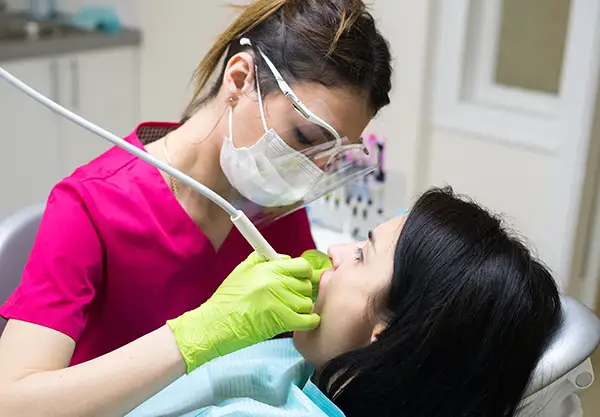 For Muscle Shoals, AL adults, regular dental cleanings prevent major dental problems by catching issues early, even though they often get treated as the easiest appointment to skip. Most major dental problems – cavities that grow into needing crowns, gum disease, cracked teeth, even some early signs of oral cancer – either start small or progress quietly. Twice-a-year cleanings are the appointment where those issues get caught while they’re still small enough to handle simply. For Muscle Shoals, AL adults, regular dental cleanings prevent major dental problems by catching issues early, even though they often get treated as the easiest appointment to skip. Most major dental problems – cavities that grow into needing crowns, gum disease, cracked teeth, even some early signs of oral cancer – either start small or progress quietly. Twice-a-year cleanings are the appointment where those issues get caught while they’re still small enough to handle simply.
At Singing River Dentistry, we’ve seen the difference firsthand between patients who keep up with their cleaning schedule and those who only come in when something hurts. The patients who stay on schedule almost always need less work overall, and what they do need tends to be smaller. The reason isn’t mysterious. A professional cleaning does things that home care simply cannot, and the dentist’s exam during that visit catches problems while they’re still easy to address.
This article walks through what a professional dental cleaning actually accomplishes, why home care alone isn’t enough, and how the routine visit prevents the bigger problems that bring people in stressed and uncomfortable.
On This Page
Home Care vs. Professional Cleaning
Even the most diligent brushing and flossing routine has limits. Once plaque hardens into tartar, no toothbrush, floss, or rinse can remove it. Tartar adheres to enamel and below the gumline, and the only way to address it is with professional instruments designed specifically for that job. This is the gap that home care cannot close, no matter how thorough your daily routine is.
The other part of the gap is access. Areas like the back surfaces of molars, around dental work, between tightly spaced teeth, and just below the gumline are difficult to clean thoroughly at home, and they’re exactly the places where decay and gum disease tend to start. A professional cleaning reaches those spots and removes what your toothbrush could not.
That doesn’t mean home care is unimportant. Daily brushing and flossing is what slows tartar buildup in the first place, and patients with consistent home care have noticeably less to address at each visit. The two work together. Home care manages plaque day-to-day, and professional plaque and tartar removal handles what builds up despite that effort.
What Happens During a Cleaning
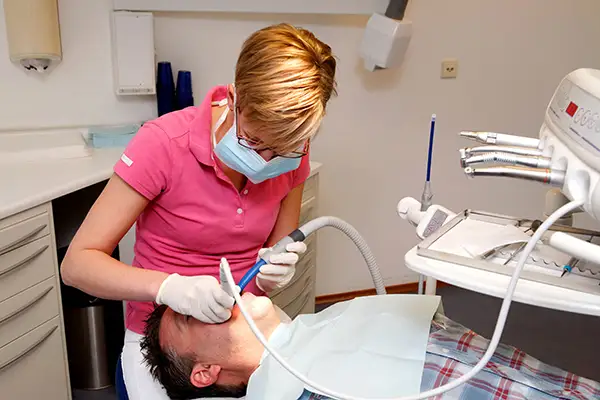 A professional cleaning is more than just polishing the surface. In our Muscle Shoals office, patients who haven’t had a cleaning in a while are sometimes surprised at the difference in how their teeth feel afterward, and that’s because the visit covers several distinct steps that home care can’t replicate. A professional cleaning is more than just polishing the surface. In our Muscle Shoals office, patients who haven’t had a cleaning in a while are sometimes surprised at the difference in how their teeth feel afterward, and that’s because the visit covers several distinct steps that home care can’t replicate.
The hygienist starts with scaling, which is the careful removal of plaque and tartar from above and below the gumline. After scaling, the teeth are polished to remove surface stains and create a smoother enamel surface that resists new plaque buildup. A fluoride treatment is often applied to help strengthen enamel and reduce sensitivity. Then the dentist conducts a thorough dental exam, reviews any needed x-rays, and includes an oral cancer screening as part of the visit.
That sequence sounds straightforward, but it’s what catches problems before they grow. The hygienist sees tissue changes during scaling, the dentist sees early decay on x-rays, and a quick visual check identifies cracks or worn restorations that the patient hasn’t noticed yet.
Problems Cleanings Catch Early
The single biggest benefit of staying on a regular cleaning schedule is that almost every common dental problem looks dramatically different at month three than it does at month eighteen. Catching things early is less invasive, less expensive in the long run, and far more comfortable to address.
A small cavity caught at a cleaning often needs only a simple filling. The same cavity ignored for a year or two might need a crown, a root canal, or in some cases extraction. Early gum disease, called gingivitis, is reversible with improved home care and a few additional cleaning visits. The same condition allowed to progress into periodontitis causes permanent bone loss and may need ongoing periodontal treatment to manage. A cracked tooth caught early can often be saved; a crack that propagates can split the tooth in a way that no longer supports a restoration.
The exam also catches things outside the teeth themselves. Wear patterns from nighttime grinding, signs of acid reflux, suspicious tissue changes that warrant follow-up, and shifts in the bite that could affect long-term comfort. None of these would be obvious at home. All of them are easier to address when they’re noticed early.
How Often You Need a Cleaning
For most adults, every six months is the right interval. The six-month standard isn’t arbitrary; it reflects how quickly tartar tends to build up and how often the dentist needs to look to catch most issues at a manageable stage. There’s a direct connection between how regular visits keep cavities at bay and staying on a consistent schedule.
Some patients need to come in more often. Patients with a history of gum disease often benefit from periodontal maintenance every three or four months. Patients with crowded teeth, recent orthodontic work, certain medical conditions, dry mouth, or higher cavity risk may also be on a shorter interval. The right schedule is something the dental team discusses with you based on your specific mouth, and it can shift over time as your needs change.
Protecting Your Smile
The patients we see with the healthiest mouths over decades aren’t the ones with the most expensive dental work. They’re the ones who came in consistently, year after year, and addressed small things while they were still small. If it’s been a while since your last cleaning in Muscle Shoals, our team is happy to get you back on track. Call 256-383-1112 or visit our practice homepage to schedule a visit.
Frequently Asked Questions
Does a dental cleaning hurt?
For most patients, a cleaning is comfortable. Some sensitivity along the gumline is common, especially if it’s been a while between visits or if gum recession is present. If you tend to feel more sensitivity, let the hygienist know at the start, and we can adjust technique and use topical numbing if needed.
Is it okay to skip a cleaning if my teeth feel fine?
Most dental problems don’t cause noticeable symptoms until they’ve progressed. Cavities, early gum disease, and cracked teeth are routinely caught at cleaning visits before the patient feels anything. Skipping cleanings tends to trade a small problem now for a bigger problem later.
What if it’s been years since my last cleaning?
You’re not alone, and our team won’t make you feel bad about the gap. The first visit back may involve a more thorough cleaning, and depending on what we find, we may recommend additional appointments to get everything caught up. The point is to get you back on a comfortable routine, not to dwell on the time between.
Do I still need cleanings if I have great home care?
Yes. Even with excellent brushing and flossing, tartar still forms in areas that home care cannot fully reach, and the dentist’s exam during a cleaning catches issues that don’t cause symptoms early on. Strong home care reduces what builds up between visits, but it doesn’t replace what a professional cleaning does.
How long does a typical cleaning appointment take?
A routine cleaning typically runs about 45 to 60 minutes, including the cleaning itself, exam, and any needed x-rays. Visits that include additional services or a longer interval since the last cleaning may run a bit longer. Our team will give you a specific time estimate when you schedule.
|
|

