Custom Night Guards vs. Drugstore Versions: The Real Differences
Posted on 8/11/2026 by Singing River Dentistry Madison |
 The honest question behind “custom vs drugstore night guards” is whether the higher cost of a professional appliance actually translates into a meaningfully better night, and at Singing River Dentistry in Madison, AL, it’s one of the questions our team gets asked most often. Both options exist for a reason. Both can absolutely help in the right situation. But the differences between them are bigger than most patients realize before they have tried one of each.
This guide compares custom and over-the-counter night guards across the five things that actually matter for nightly wear: fit, material, comfort, effect on your bite, and protection of any dental work you already have. It also lays out when an over-the-counter guard is a reasonable short-term choice, and the situations where a professional night mouth guard is genuinely worth the difference.
There is no judgment in either direction. The right answer depends on how often you grind, what is already in your mouth, and how long you expect to be wearing the guard.
On This Page
The Honest Quick Answer
For occasional, mild clenching once or twice a month, a boil-and-bite drugstore guard can be a reasonable short-term option. For nightly grinding, jaw soreness in the morning, existing crowns or veneers, or any setup you plan to wear for more than a few months, a custom guard is genuinely worth the investment. The reason is not snobbery about over-the-counter options. It is that a guard that does not fit precisely tends to move during sleep, fall out, or shift the bite in ways that can leave you worse off than no guard at all.
That short answer covers most patients. The rest of this guide walks through why, in case the specifics matter for your situation.
The Real Differences That Matter
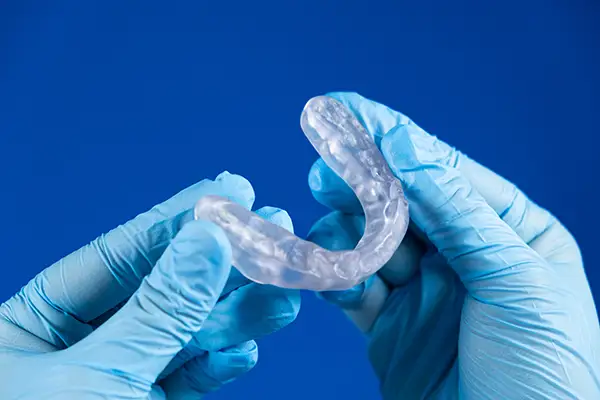 Marketing aside, there are four practical differences between custom and drugstore night guards. Most of them come back to one thing: precision of fit.
Fit
A custom guard is built from digital scans or physical impressions of your teeth, so it sits exactly against each tooth surface with no shifting. A drugstore boil-and-bite molds to a rough impression of your bite, but the plastic never grips individual teeth the way a custom appliance does. An imprecise fit causes the guard to slide, fall out during sleep, or, over time, train your bite into a slightly altered position. That last issue is the most underrated and the most consequential.
Material and Durability
Custom guards are made from materials chosen to match your grinding force. Lighter material for occasional clenchers, denser material for heavier grinders. A well-made custom guard typically lasts five years or longer. Drugstore guards are made from a softer, uniform material that compresses under grinding force and often needs replacing within a few months. The cost gap closes quickly when you account for how often a drugstore guard has to be replaced.
Comfort for Nightly Wear
Custom guards are thin where they need to be thin and slightly thicker where the bite needs reinforcement. Over-the-counter guards are uniformly bulky, which is the single most common reason patients say they “tried a night guard and could not sleep in it.” If the only guard you have ever worn was a drugstore version, your experience of how a night guard feels may be very different from what a custom one is actually like.
Effect on Your Bite
A poorly fitting guard can change how your teeth meet each other. Over months of nightly wear, this can make clenching worse, contribute to jaw soreness, or in some cases cause teeth to drift. The drifting risk is highest in younger patients, whose teeth are still settling. A custom guard is built around your existing bite, so it protects without rearranging anything.
Protection for Existing Dental Work
This is the category where the custom-versus-drugstore decision usually answers itself. Anyone with crowns, veneers, bridges, or implants should be wearing a custom guard, no asterisks. Grinding force concentrated against restorative work can chip porcelain, loosen bridges, or fracture the natural tooth structure underneath an old restoration. The cost of replacing a single damaged crown, veneer, or implant restoration is many times the cost of a custom guard.
The same logic applies to patients who have recently completed orthodontic treatment. A custom retainer-style guard protects the new tooth positions while also addressing nighttime bruxism. We commonly fit these as part of a broader plan that may include other teeth grinding solutions when grinding is heavy enough to need a layered approach.
When Drugstore Options Make Sense
 To be fair, there are situations where a drugstore guard is the practical right call.
A single stressful week: If you are going through a particularly stressful patch and clenching for a few nights, a boil-and-bite guard from the drugstore can absorb the force until the stress clears. It is also a reasonable short-term option while traveling without a custom guard.
Testing whether grinding is the issue: If you wake up with jaw soreness and are not sure whether grinding is the cause, an inexpensive guard for a week or two can help confirm the pattern before you invest in something custom.
Kids whose teeth are still changing: For children whose mouths are growing and shifting, a fitted guard would be outgrown quickly. A drugstore version, or a guard built for athletic use, often serves better until the permanent teeth are in.
These are real, valid uses. They are not the same situation as nightly grinding for an adult with permanent teeth and existing dental work, which is where the custom case becomes much stronger.
How to Decide Which One Fits Your Situation
Three questions usually settle it.
First, how often will you wear it? Once a month is one situation. Six or seven nights a week is a completely different one.
Second, what is in your mouth that needs protecting? Natural teeth are tough but not invincible. Crowns, veneers, and implants are more vulnerable to grinding force than the teeth they replaced.
Third, how long do you expect to use a night guard? A few weeks is a short-term scenario. Indefinitely is a long-term one, and long-term comfort matters in a way that does not register until the fourth or fifth month of nightly wear.
If your answers point toward frequent wear, existing dental work, or long-term use, the custom path almost always pays for itself, both in the longevity of the guard and in what it protects. The appointment for a custom guard also includes an evaluation of wear patterns and any related issues like TMJ disorder or sleep-related grinding, which a drugstore purchase cannot offer.
Talking to Our Madison Team About Night Guards
If you are weighing your options or are not sure where to start, our Madison team can walk you through the differences and look at your specific situation. Call 256-653-9830 or visit our Singing River Dentistry homepage to set up a visit.
Frequently Asked Questions
How long does a custom night guard usually last?
A well-made custom guard usually lasts five years or longer with consistent wear and proper care. Heavy grinders may see a shorter lifespan, and patients who clench only occasionally can sometimes get more. Routine check-ins let us evaluate wear and recommend replacement when the time comes.
Can a drugstore night guard actually damage my teeth?
A poorly fitted boil-and-bite guard can shift your bite over time, especially with nightly use. In some patients, this leads to jaw soreness or tooth movement that requires correction later. The risk is highest with younger patients whose teeth are still settling, or with patients who grind heavily for long periods.
Are there different types of custom night guards?
Yes. Soft guards work well for light clenchers. Hard or dual-laminate guards are typically recommended for moderate to heavy grinders, or for patients with significant existing dental work. Our team selects the type that best fits your wear pattern. More information is available on our custom mouth guards page.
How do I clean a custom night guard?
Rinse the guard under cool water each morning, then brush gently with a soft toothbrush and unscented hand soap or a guard-safe cleaner. Avoid toothpaste, which is abrasive, and hot water, which can warp the material. Store it dry in a ventilated case between uses.
Will insurance cover a custom night guard?
Some dental insurance plans cover a portion of the cost when grinding is documented as a clinical need, while others do not include it. Our front office team can review your plan and walk you through what to expect before treatment begins. |
|

