Warning Signs a Tooth Infection Is Spreading
Posted on 6/24/2026 by Singing River Dentistry Madison |
 Most tooth infections are treatable when caught early, but a tooth infection that has begun spreading beyond the tooth itself can become a medical emergency that needs immediate care. Knowing the warning signs is the difference between a routine appointment and an ER visit. At Singing River Dentistry in Madison, AL, we want patients to feel informed without feeling panicked: this guide walks through how to tell when a tooth infection is staying put and when it’s starting to move, plus exactly what to do at each level.
The good news is that the vast majority of tooth infections are handled successfully with prompt treatment. The problem usually isn’t the infection itself, it’s the wait. The longer it sits, the more chances it has to spread into surrounding tissues, the jaw, or even further. If you suspect you have one, please don’t wait it out. Reach out for dental abscess treatment in Madison as soon as possible.
On This Page
Localized vs Spreading: The Important Difference
A localized tooth infection is contained to the tooth and a small area of surrounding tissue. It typically causes a focused, throbbing ache, sensitivity to pressure or temperature, mild swelling near the affected tooth, and sometimes a small bump on the gum that can drain pus. These infections are treatable on a normal appointment timeline, usually with a root canal procedure, antibiotics, or in some cases tooth extraction.
A spreading infection is one that has broken out of that contained area and is moving into the soft tissues of the face, neck, or beyond. This happens when the body’s defenses can’t wall the infection off, or when an untreated abscess has been growing for days or weeks. Once an infection is spreading, the timeline tightens significantly. What was a same-week appointment becomes a same-day visit, and what would have been an urgent visit can become a hospital trip.
The shift from one to the other is usually subtle at first, which is why most people miss the early signs.
Major Warning Signs to Watch For
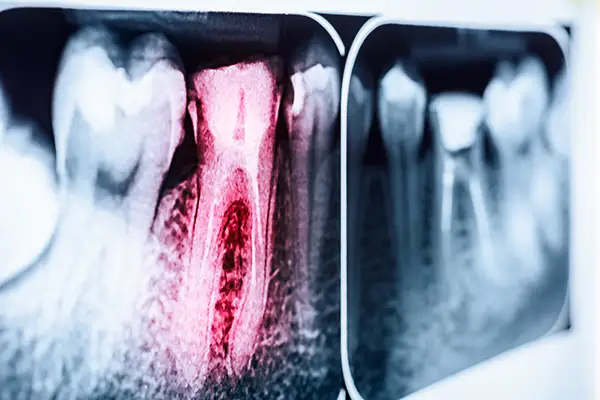 These are the signs that suggest an infection has moved beyond the original tooth. One or two of these warrants a same-day call. Several of them together is an urgent situation.
- Facial swelling beyond the immediate area - Swelling that spreads into the cheek, around the eye, under the jaw, or down toward the neck is a clear sign the infection isn’t contained.
- Fever, chills, or feeling generally unwell - Dental infections can stay local without making you feel sick. A fever means your body has launched a wider immune response.
- Pain spreading away from the tooth - When the ache radiates into the ear, jaw, neck, or the opposite side of the face, the infection or the inflammation around it has expanded.
- Swollen lymph nodes in the neck - Tender, pea-sized or larger lumps along the sides of the neck or under the jaw signal that your immune system is fighting something significant.
- Bad taste or pus draining with a foul odor - This usually means an abscess has burst, which can briefly reduce pressure but doesn’t mean the infection is over. It still needs treatment.
- Difficulty opening your mouth (trismus) - When swelling reaches the muscles that control jaw movement, opening becomes limited and uncomfortable. This is a red flag.
If any of these are present, call our office right away. Even if you’re not sure, it’s better to be evaluated than to wait and see.
Red-Flag Symptoms That Need ER Care Right Now
A small number of symptoms mean the infection may be threatening your airway, heart, or other systems. These are not “call your dentist in the morning” situations. They are “go to the emergency room now” situations.
| • |
Difficulty swallowing or breathing - Swelling in the floor of the mouth or under the tongue (a condition called Ludwig’s angina) can compress the airway. This is a true medical emergency.
|
| • |
Severe swelling that distorts the face or neck - Large, hard, or rapidly worsening swelling, especially with difficulty turning the head, needs immediate evaluation.
|
| • |
Confusion, disorientation, or rapid heartbeat - These can be signs of sepsis, where infection has reached the bloodstream and is affecting the whole body.
|
| • |
Visible red streaks on the skin - Red lines extending from the swollen area along the neck or chest can indicate lymphangitis, an infection moving through the lymph system.
|
| • |
High fever (above 102 degrees) with chills - Combined with any dental symptoms, this needs immediate medical evaluation, not a dental visit alone. |
If any of these apply, go to the nearest emergency room. The ER team can stabilize you, manage the infection with IV antibiotics if needed, and coordinate with a dentist or oral surgeon for the dental side of treatment.
What to Do at Each Severity Level
Knowing what category you’re in helps you act appropriately without panicking. There’s a real range here, and not every dental infection is an emergency. Here’s how to think about it.
Mild, localized symptoms with no spreading signs
Call our office promptly to schedule an urgent visit. Don’t delay even if symptoms temporarily ease. An abscess that suddenly “stopped hurting” has often just drained, which doesn’t mean the infection is gone. While you wait for your appointment, you can manage discomfort with an over-the-counter pain reliever following label directions, gentle warm saltwater rinses several times a day, and a cold compress for any swelling. Continue gentle brushing of the area, but avoid flossing directly into the sensitive spot.
Spreading signs but no breathing or systemic problems
This is still urgent, not “wait until morning” territory. Call us the same day, or visit an urgent care clinic if our office is closed. You may need antibiotics started before any dental procedure can begin, and our team can prescribe and coordinate that. The dental work to actually clear the infection (a root canal, extraction, or drainage) will follow.
Breathing difficulty, severe swelling, fever with confusion, or rapid heart rate
Go to the emergency room immediately. Don’t drive yourself if symptoms are severe; have someone take you, or call for help. The ER will start IV antibiotics, address the systemic infection, and bring in a dental or oral surgery consult to handle the source tooth.
Why Waiting Is Almost Always Worse Than Treating
Many of the more serious dental infection cases we see started as something a patient hoped would resolve on its own. Tooth infections don’t heal without treatment. The bacterial source inside the tooth has no blood supply that the body can use to fight it off, so antibiotics alone may calm symptoms temporarily, but the infection rebuilds once the medication is finished unless the tooth itself is treated.
Waiting also tends to take treatment options off the table. A tooth that could have been saved with a root canal a week ago may need to be removed today if the infection has destroyed too much surrounding bone. What would have been one visit can turn into multiple visits, drainage procedures, or hospital stays.
Catching things early is almost always simpler, less expensive, and more comfortable than waiting. A prompt toothache evaluation at the first sign of trouble usually prevents the more involved scenarios above.
Don’t Wait to Get Help
A tooth infection caught early is almost always treatable. A tooth infection that’s allowed to spread is a different situation entirely. If something feels off, especially with any of the warning signs above, call Singing River Dentistry at 256-653-9830 or visit our Madison practice online so we can see you quickly. Our Madison, AL team handles emergency dental care daily and can guide you on what to do over the phone.
Frequently Asked Questions
How fast can a tooth infection actually spread?
It varies a lot. Some infections stay localized for weeks or months and others spread into the face or neck within a day or two. Health, immune status, and how aggressive the bacteria are all play a role. Once spreading signs appear, treatment shouldn’t wait.
Can a tooth infection go away on its own?
No. Symptoms may come and go, especially if an abscess drains, but the source of the infection inside the tooth doesn’t heal without treatment. The tooth either needs root canal treatment, drainage, or extraction to actually clear it.
Will antibiotics alone cure a tooth infection?
Antibiotics are an important tool for controlling a spreading infection and reducing symptoms, but they don’t eliminate the source. The infected pulp or surrounding tissue still needs to be addressed by a dentist. Antibiotics buy time and reduce risk; dental treatment finishes the job.
Is it bad if my abscess starts draining?
It’s a mixed picture. Drainage relieves pressure and usually reduces discomfort, which can feel like the problem is solving itself. It isn’t. The bacterial source is still active, and a drained abscess often recurs. Get it treated even if you feel better.
Can a tooth infection actually be life-threatening?
Rarely, but yes. Severe spreading infections can compress the airway, reach the bloodstream (sepsis), or extend into the deep tissues of the neck or chest. These cases are uncommon, especially when people seek care at the first warning signs, but they’re the reason we treat dental infections seriously. |
|

