Why Baby Teeth Are More Important Than Many Parents Think
Posted on 1/21/2026 by Singing River Dentistry Madison |
 One of the most common questions parents in Madison ask our team is about the real importance of baby teeth: do they need fillings and cleanings if they are going to fall out anyway? It is a fair question, and the answer matters more than most parents expect. Baby teeth shape the bite, the speech, and even the position of the permanent teeth coming in behind them. Treating them as temporary is a costly assumption: a small problem at age four can become a much larger one by age seven, and a lost baby tooth can throw off the spacing of an adult tooth that has not even erupted yet. Understanding what baby teeth actually do changes how families approach early dental care.
At Singing River Dentistry in Madison, AL, we take care of children alongside their parents and grandparents every day. We see the patterns clearly because we see the same families across years. Early dental visits, paired with steady home habits, save children from procedures they would otherwise need later. Starting pediatric dental visits young is one of the best long-term investments a parent can make in their child’s health.
This guide walks through what baby teeth actually do during childhood, when decay in a baby tooth becomes a bigger problem than it looks, and how to set your child up for a healthy adult smile by acting early.
On This Page
The Baby Teeth Misconception
The assumption that baby teeth are unimportant is understandable. They are temporary, after all, and a young child who loses a front tooth at six will have a permanent replacement on the way. But the timeline is longer and more layered than it appears. The first baby teeth come in around six months of age, and the last ones (the second molars at the back of the mouth) do not fall out until somewhere between ages ten and twelve. That means most kids have a full set of working baby teeth for more than a decade, right through the years when speech, eating habits, jaw development, and dental anxiety are all being shaped.
A second part of the misconception is what happens beneath the surface. The permanent teeth are developing inside the jawbone the entire time, often sitting just millimeters below the roots of the baby teeth above them. Infection, premature loss, or misalignment in a baby tooth can affect the permanent tooth that follows. The mouth at age four is doing work that shows up at age fourteen.
What Baby Teeth Actually Do
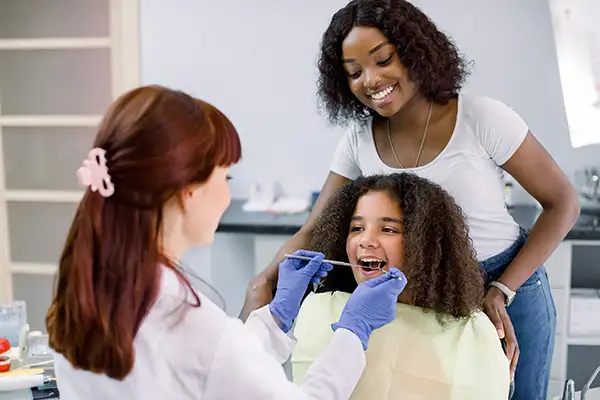 Baby teeth do real work during childhood. The roles below are not exhaustive, but they cover the ones that come up most often in our exam room conversations with parents, and the reasons we treat baby teeth with the same care we would give a permanent tooth.
Holding Space for Permanent Teeth
Each baby tooth holds the spot where a permanent tooth is going to come in. When a baby tooth is lost early (especially a molar, due to severe decay or trauma), the teeth next to that empty space tend to drift inward. By the time the permanent tooth is ready to erupt, the spot it needs has narrowed or closed off. The result is crowding, blocked eruption, or an impacted tooth, and the fix is often orthodontic treatment that could have been avoided. We sometimes place a small space maintainer when a baby tooth is lost early, which keeps the gap open until the permanent tooth arrives.
Building Speech and Pronunciation
The sounds children learn between ages two and six are formed with the help of their front teeth and tongue position. Sounds like “f,” “v,” “s,” “z,” and “th” rely on contact between the tongue and the teeth. Missing or visibly decayed front teeth during this window can affect how a child shapes those sounds, and the speech patterns sometimes persist even after the permanent teeth arrive. Keeping the front teeth healthy supports clear pronunciation through a developmentally important stretch.
Chewing and Healthy Nutrition
Kids who have cavities, broken teeth, or dental discomfort often shift toward softer foods because chewing is no longer pleasant. Over time, this can narrow their diet toward more processed, less nutritious options. Healthy baby molars let kids work through whole fruits, raw vegetables, lean protein, and other foods that support growth. We often see this pattern reverse quickly after a child has dental treatment done; appetite and food preferences open back up.
Protecting the Permanent Teeth Underneath
This is the role that worries us most when we see it going wrong. A deep cavity in a baby tooth can develop into an infection at the root, and because the permanent tooth sits just below, that infection can damage the enamel of the permanent tooth before it ever erupts. The result is sometimes a visibly discolored, malformed, or weakened adult tooth, requiring restoration soon after it comes in. Treating cavities in baby teeth early prevents this kind of damage, which is one reason dental sealants and fluoride treatments are so valuable on baby molars.
Sleep, School, and Quality of Life
A toothache affects sleep, mood, focus, and attendance. Studies of school-aged children consistently link untreated dental problems to lower attendance and reduced classroom performance. A child with a chronic toothache is not the version of themselves their family knows. Restoring comfort is not cosmetic; it is foundational to how children move through their day.
Building Lifelong Dental Habits
How children experience the dentist between ages one and six shapes their attitude toward dental care for the rest of their lives. Calm, friendly, age-appropriate visits during early childhood reduce anxiety in adolescence and adulthood. Skipping those visits because the teeth are “not the real ones” tends to backfire; we often meet adult patients whose early experiences (or lack of them) still color how they feel about being in the chair.
When Decay Becomes a Bigger Problem
Early childhood cavities can move quickly. The enamel on baby teeth is thinner than on permanent teeth, and decay can reach the nerve in a matter of months once it has started. A small spot that looks minor on the outside may already be reaching the inside layer of the tooth. Sensitivity, swelling, infection, and damage to the developing permanent tooth are all on the table if a cavity is left alone.
That is why our team will treat decay in a baby tooth even when the tooth is only a few years from coming out on its own. A filling is a small intervention. An infected baby tooth that needs to be removed, leading to space loss and possible damage to the permanent tooth underneath, is a much larger one. The math works in favor of acting early.
Starting Dental Visits at the Right Time
The American Academy of Pediatric Dentistry recommends a first dental visit by age one or within six months of the first tooth appearing, whichever comes first. The first visit is mostly about getting comfortable: a quick look around the mouth, a discussion of tooth eruption and feeding habits, and a chance for parents to ask questions. From there, routine dental exams every six months let our team catch small concerns before they become big ones.
For families new to our office, the early visits often double as a chance to learn about brushing technique, fluoride use, pacifier and thumb habits, and how to handle the inevitable bumps and falls that come with toddler years. We approach these visits as a partnership; you know your child, and we know teeth, and the best results come when both halves are present.
Treating Baby Teeth as Real Teeth
Treating baby teeth as real teeth is a small shift in mindset that tends to pay off for years. If you have questions about your child’s smile or are ready to schedule a first visit, our family dentistry team in Madison would be glad to help. Call us at 256-653-9830 or learn more about our practice on the Singing River Dentistry homepage.
Frequently Asked Questions
At what age should my child have their first dental visit?
The American Academy of Pediatric Dentistry recommends a first visit by age one or within six months of the first tooth appearing. The early visit is mostly introductory: a gentle look in the mouth, education for parents, and a chance for your child to get comfortable in the chair.
Do baby teeth really need fillings?
Yes, in most cases. Untreated decay in baby teeth can spread to the developing permanent tooth, lead to infection, and cause early loss of the tooth, which then affects how the permanent teeth come in. A small filling is a much smaller intervention than the problems decay can cause later.
When do baby teeth finally fall out?
Most children begin losing baby teeth around age six, starting with the lower front teeth. The back molars, however, often stay in place until ages ten to twelve. This means many baby teeth are doing real work for more than a decade.
What happens if my child loses a baby tooth too early?
When a baby tooth is lost early, neighboring teeth tend to drift into the empty space, which can leave less room for the permanent tooth to come in. Our team may recommend a small space maintainer to hold the spot open until the permanent tooth is ready to erupt.
How do I help my child build good brushing habits early?
Brush together twice a day until your child has the coordination to do it well alone, usually around age seven or eight. Use a soft brush and an age-appropriate amount of fluoride toothpaste. Keeping the routine calm and consistent matters more than any single technique.
Are sealants safe for baby teeth?
Yes. Sealants are a thin protective coating applied to the chewing surfaces of back molars, and they are well established as a safe, effective way to reduce cavities in both baby and permanent teeth. They are quick to apply and do not involve any tooth preparation or numbing. |
|

