How Diabetes Impacts Oral Health: What Madison Patients Should Know
Posted on 1/7/2026 by Singing River Dentistry Madison |
 Diabetes and oral health are connected in both directions, and that connection matters more than most people realize. When blood sugar runs high over time, the tissues inside the mouth respond in measurable ways: gum disease shows up more often, saliva production can drop, healing tends to slow, and yeast infections become more likely. The relationship moves in reverse as well, because active gum infection raises systemic inflammation, which can make blood sugar harder to control. For patients in Madison, AL who are managing diabetes, that two-way link is the reason routine dental care is not optional.
At Singing River Dentistry in Madison, we see patients with type 1 diabetes, type 2 diabetes, and prediabetes every week. Our team has watched small routine changes (more frequent cleanings, better dry-mouth management, timing procedures around well-controlled periods) add up to noticeable improvements at the chair and, often, at the next physician visit too. We work alongside primary care doctors and endocrinologists as part of specialized dental care for diabetic patients whenever a coordinated approach makes sense.
On This Page
The Two-Way Connection Between Diabetes and Oral Health
Diabetes affects the mouth because elevated blood glucose changes the environment inside it. Higher glucose levels in saliva feed cavity-causing bacteria, and ongoing high blood sugar weakens the body’s response to the bacteria already living in dental plaque. Small blood vessels in the gums become less efficient at delivering nutrients and clearing away the byproducts of infection. The result is that gum disease starts earlier, advances faster, and is harder to reverse than in people without diabetes.
The relationship runs the other way as well. Inflammation in the gums is a low-grade infection, and chronic infection of any kind raises levels of inflammatory markers in the bloodstream. Those markers interfere with how the body uses insulin, which can nudge blood sugar upward and make it harder to hold A1C in range. Several large studies have shown that treating active gum disease in patients with diabetes is associated with modest but real improvements in glycemic control. The practical takeaway is simple: caring for the mouth is part of managing diabetes, not separate from it.
That is why our hygienists ask about A1C and current medications during cleanings. If periodontal disease is already present, we want to know what we are working alongside, and we want your physician to know what we are seeing on our end.
Common Oral Health Problems in Diabetic Patients
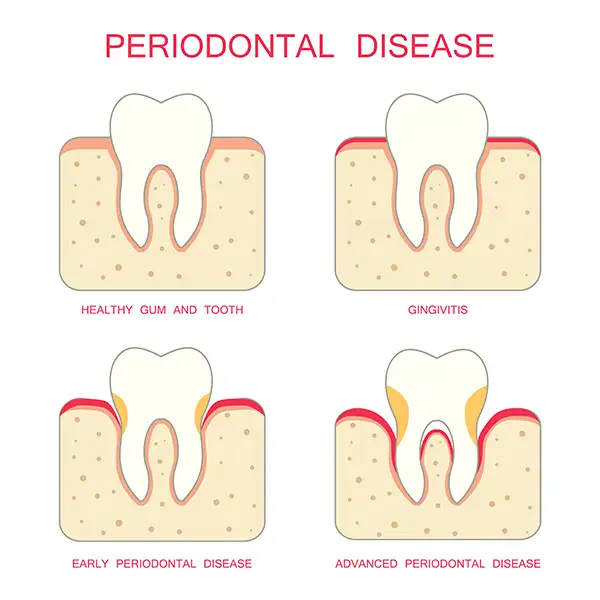 Several conditions show up more often in patients with diabetes, especially when blood sugar has been running high or has been hard to stabilize. None of these are inevitable, and most respond well to the right combination of medical management and dental care. Knowing what to watch for is the first step.
Gum Disease and Periodontitis
Gum disease is by far the most common oral health problem tied to diabetes. The earliest stage, gingivitis, shows up as redness, puffiness, and bleeding when you brush or floss. Left unchecked, it advances to periodontitis, where the supporting bone around the teeth begins to recede and pockets form between the gums and tooth roots. In patients with diabetes, this progression is often quicker, and treatment generally needs to be more attentive. That can mean scaling and root planing, more frequent maintenance visits, or targeted antimicrobial therapy. Many of our patients with diabetes do well on a three or four month periodontal maintenance schedule rather than the standard six-month cleaning cycle.
Dry Mouth (Xerostomia)
A reduction in saliva flow is common in patients with diabetes, partly from the condition itself and partly from medications used to manage it, including some blood pressure medications, diuretics, and antidepressants often prescribed alongside diabetes care. Saliva is the mouth’s natural cleansing system: it rinses away food debris, neutralizes acid, and delivers minerals back to tooth enamel. When saliva flow drops, cavity rates climb, the gums become more vulnerable, and the soft tissues feel sore or sticky. We address dry mouth directly with xerostomia relief options including prescription rinses, in-office fluoride, and hydration habits that actually work in our Alabama climate.
Cavities and Tooth Decay
Dry mouth combines with elevated glucose in saliva to create ideal conditions for the bacteria that cause cavities. We tend to see decay show up in places it would not in a non-diabetic patient: along the gumline, at the necks of teeth where roots are exposed, and at the margins of older fillings or crowns. Fluoride applications during routine teeth cleaning appointments add real protection, and we will sometimes recommend a prescription-strength fluoride toothpaste for daily use at home.
Oral Thrush and Other Fungal Infections
Candida, the yeast responsible for thrush, thrives in warm, sugary, dry environments, all of which describe the mouth of a person with poorly controlled diabetes more often than a healthy mouth. Thrush appears as creamy white patches on the tongue, inner cheeks, or palate, sometimes with a burning feeling or a metallic taste. Patients who wear dentures, smoke, or take antibiotics or inhaled steroids are at extra risk. Treatment is usually straightforward with antifungal medication, though recurrent thrush is often a signal that blood sugar control needs another look.
Taste Changes and Burning Sensations
Some patients with diabetes notice that food tastes flatter or experience a persistent metallic or burning sensation in the mouth. This can be tied to dry mouth, fungal overgrowth, nerve changes, or some combination, and is worth mentioning to both your dentist and your physician because the cause guides the fix.
Why Healing After Dental Procedures Can Take Longer
Wound healing depends on healthy circulation and a working immune response, and both can be slower in patients with diabetes. After an extraction, periodontal procedure, or implant placement, the tissue takes more time to close, and the risk of infection during that window is somewhat higher. None of this means a person with diabetes cannot have these procedures done; it means we plan them differently.
When possible, we schedule larger procedures during a stretch where blood sugar is well controlled. We may ask for a recent A1C reading, coordinate timing of insulin or oral medications around the appointment, and adjust pre-procedure instructions for eating and hydration. After the visit, we tend to schedule follow-ups more closely so we can catch any healing concern early. For implant placements specifically, this kind of advance planning has a meaningful impact on long-term success.
Daily Habits and Office Visits That Protect Your Smile
The most useful habits for patients with diabetes are not glamorous, but they are consistent. The mouth responds to steady care more reliably than to occasional intensive effort.
Brushing twice a day with a soft-bristled or electric brush, flossing or using a water flosser daily, and cleaning the tongue all help reduce the bacterial load that drives gum inflammation. Rinsing with water after meals (especially after anything sticky or sweet) helps when dry mouth is in play. Drinking water through the day, easing off caffeine and alcohol in the evening, and running a humidifier overnight can take pressure off saliva production. Sugar-free gum or lozenges with xylitol stimulate saliva flow and bridge the gap between meals.
On the office side, we usually recommend that patients with diabetes come in every three or four months rather than every six. That cadence catches gum inflammation while it is still reversible, gives us a chance to apply fluoride more often, and lets us check for any soft-tissue change worth a closer look. Tell us when your medications change, when your A1C shifts significantly, and if you have been hospitalized or started a new treatment. None of these need to wait for your next visit; a quick call to the office is enough.
Working With Your Dentist as Part of Your Diabetes Care
Good diabetes management and good dental care reinforce one another, and the patients we see do best when they treat both as part of the same effort. If you live in Madison, AL or the surrounding area and would like a dental team that understands the medical side of your care, we would be glad to help. Call our office at 256-653-9830 to schedule a visit, or learn more about our practice on the Singing River Dentistry homepage.
Frequently Asked Questions
Should I tell my dentist that I have diabetes?
Yes, and update us if anything changes. Knowing your diagnosis, your current medications, and a recent A1C if you have one helps us plan cleanings and procedures around your overall health and watch for the gum and soft-tissue changes that come up more often in diabetic patients.
How often should diabetic patients get a dental cleaning?
Many patients with diabetes do best on a three to four month cleaning schedule rather than the standard six months. This is especially true if there are signs of gum disease or if blood sugar has been hard to keep in range. Our team will recommend a cadence based on what we see at your visit.
Can gum disease really affect my blood sugar?
Yes. Active gum infection raises the body’s overall inflammatory load, which can interfere with how insulin works and push blood sugar higher. Treating gum disease has been shown to support modest improvements in glycemic control, which is one reason we coordinate with primary care doctors when appropriate.
Is it safe to have dental work done if my blood sugar is not well controlled?
Routine cleanings are almost always fine. For larger procedures like extractions, implants, or periodontal treatment, we often try to schedule during a window when blood sugar is more stable, both for comfort and for better healing. Our team will discuss timing and any pre-procedure adjustments with you.
What can I do at home to manage dry mouth from my diabetes medications?
Sipping water throughout the day, using sugar-free gum or lozenges with xylitol, sleeping with a humidifier, and easing back on caffeine and alcohol all help. Over-the-counter dry mouth rinses and prescription products can add real relief when home steps are not enough.
Are dental implants a good option for diabetic patients?
Yes, particularly when diabetes is well controlled. Healing can take a bit longer, but long-term success rates for implants in patients with stable blood sugar are very close to those in non-diabetic patients. Planning, timing, and close follow-up make a meaningful difference. |
|

