What White Spots on Teeth Actually Mean
Posted on 11/26/2025 by Singing River Dentistry Madison |
 If you have noticed chalky white spots on your teeth and wondered what they mean, the answer depends entirely on what caused them. Some white spots signal the earliest stage of a cavity that can still be reversed with the right care. Others are cosmetic patterns left over from childhood tooth development. A few appear only temporarily after dental work or whitening and resolve on their own. At our Madison, AL office, patients regularly ask us about these spots, and the right next step is different for each cause.
This article walks through the most common reasons white patches on teeth appear, how to tell them apart, and what treatment options work for each one. If you have been searching for why your teeth are white in spots, the diagnostic picture below covers the main possibilities. Identifying which type you have is the first step, and that usually happens during a routine dental exam.
On This Page
Common Causes of White Spots on Teeth
White spots are a visual symptom, not a diagnosis. The same chalky appearance can come from several different sources, and the underlying issue ranges from completely benign to an early cavity that needs attention.
When we examine white spots in our Madison office, we usually sort them into one of these categories: early enamel demineralization, fluorosis from childhood, enamel hypoplasia from developmental issues, plaque buildup, dehydration after dental procedures, or trauma to a single tooth. Each looks slightly different, appears in different locations, and follows a different treatment path.
Knowing the difference matters because some white spots respond to remineralization at home, others need cosmetic treatment, and a few signal something happening inside the tooth that should be evaluated.
Early Demineralization: A Reversible Cavity
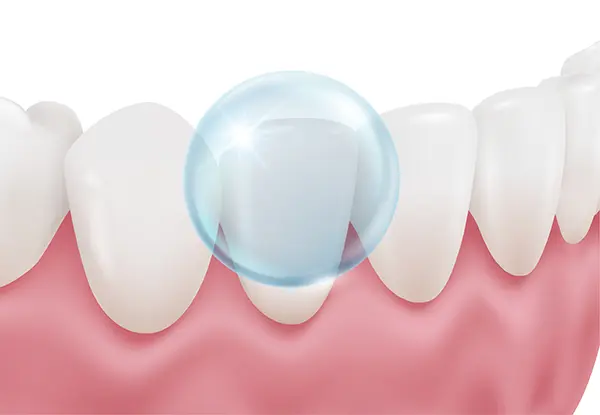 The most common white spot we see is early demineralization, which is essentially the first visible stage of tooth decay. Enamel is built from minerals, and when acid-producing bacteria sit on a spot for long enough, those minerals leach out faster than your saliva can replace them. The surface stays intact, but the underlying enamel becomes porous and reflects light differently, which is why it looks chalky white.
These spots most often appear along the gumline, on smooth surfaces between brushing zones, and around orthodontic brackets after braces come off. Anyone who wore braces and skipped careful brushing around the brackets knows this pattern well: a row of white squares outlining where each bracket used to sit.
The good news is that demineralization is reversible if caught early. Adding minerals back into the enamel through prescription-strength fluoride treatment, improved daily hygiene, and reduced sugar exposure can rebuild the surface before a cavity forms. Once that early spot collapses into an actual hole, a filling becomes necessary, so this is the stage where action matters most.
Fluorosis and Developmental Spots
Fluorosis appears as chalky white streaks, lines, or patches that have been on the teeth since they erupted. It happens when a child takes in too much fluoride during the years their adult teeth are forming under the gums, usually before age eight. The fluoride creates a slight disturbance in how the enamel mineralizes. Mild fluorosis is purely cosmetic and very common, especially in adults who grew up swallowing toothpaste or drinking heavily fluoridated water as kids.
Enamel hypoplasia is a related but distinct condition. The enamel itself formed thinner or with defects, often due to a high fever during early childhood, certain medications, malnutrition during tooth development, or trauma to a baby tooth that disturbed the adult tooth growing beneath it. These spots can have a more irregular shape than fluorosis and sometimes feel slightly pitted to the tongue.
Both fluorosis and hypoplasia are stable conditions. The spots will not get worse, but they will not go away on their own either. If they bother you cosmetically, options like cosmetic bonding or porcelain veneers can cover them.
Temporary White Spots: Plaque, Dehydration, and Trauma
A few causes of white spots are temporary and either resolve on their own or brush away.
Thick plaque buildup can look like a soft white patch on the tooth surface. The test is simple: if it brushes away, it was plaque. The same area is a warning sign that bacteria are sitting there long enough to start the demineralization process, so improved brushing in that spot matters.
Dehydration spots show up after teeth have been isolated and dried during dental work or after professional whitening. The enamel temporarily loses moisture and looks blotchy or chalky. Within a few hours to a few days, saliva rehydrates the enamel and the appearance evens out.
Trauma can produce a single sudden white spot on one tooth, often following a fall, sports impact, or hit to the mouth. This kind of spot deserves a closer look because the discoloration sometimes reflects changes happening inside the tooth or to the blood supply at the root. If the tooth later turns gray, pink, or starts hurting, the nerve may be involved and an evaluation should not wait.
Treatment Options Based on the Cause
Because white spots come from different sources, treatment is matched to the cause rather than applied as a one-size-fits-all fix.
For early demineralization caught at the white-spot stage, the goal is remineralization. Prescription fluoride toothpaste or in-office fluoride varnish can drive minerals back into the porous enamel and reverse the spot before it becomes a cavity. Dental sealants can also protect at-risk grooves from future demineralization, especially for kids and teens.
For fluorosis and hypoplasia spots that are stable but cosmetically bothersome, several options exist. Microabrasion gently removes a microscopic layer of the surface enamel and can blend mild spots. Resin infiltration uses a thin material that bonds into the porous enamel and makes the spot disappear visually. For more noticeable patches, tooth bonding or dental veneers cover the area entirely.
For trauma-related white spots, the first step is evaluation rather than cosmetic treatment. If the tooth is otherwise healthy, the spot can later be addressed with bonding or veneers. If the nerve has been affected, the tooth needs to be treated before any cosmetic work.
For plaque or dehydration spots, no treatment is needed beyond improved brushing or simply waiting for the enamel to rehydrate.
When to See a Dentist in Madison
Most white spots are not emergencies, but they are worth bringing up at your next visit. Spots that appeared along the gumline or after braces should be evaluated soon because they may represent early decay that can still be reversed. A new white spot following any kind of impact to the mouth should be checked even sooner. If you are in Madison and have noticed changes in the appearance of your teeth, call us at 256-653-9830 or schedule a visit with our team to find out exactly what you are looking at.
Frequently Asked Questions
Can white spots on teeth go away on their own?
Some can. Spots from plaque brush off, and spots from dehydration after dental work or whitening usually resolve within a day or two. Early demineralization spots can often be reversed through improved hygiene and fluoride, but fluorosis and enamel hypoplasia spots are permanent without cosmetic treatment.
Does whitening get rid of white spots?
Whitening usually does not remove white spots. Because the spots are typically lighter than the surrounding enamel, whitening brightens both areas and the spots often remain visible. In some cases the contrast even becomes more noticeable temporarily. Our team can recommend the right approach during a whitening consultation.
Are white spots on teeth a sign of a cavity?
They can be. The earliest visible stage of a cavity often looks like a chalky white spot near the gumline or on a smooth tooth surface. At this stage, no hole has formed yet and the spot can usually be reversed with fluoride and better hygiene. If you see new white spots in these areas, having a dentist look at them is worthwhile.
Why did white spots appear after my braces came off?
Brackets create areas that are hard to clean during orthodontic treatment. Plaque sits along the bracket edges for long periods and pulls minerals from the enamel underneath. When the brackets come off, the demineralized outline becomes visible as white squares. Improving hygiene and using fluoride immediately after braces removal helps these spots fade and prevents new ones.
Should I be worried if a white spot appears after a hit to my mouth?
A white spot on a single tooth after trauma is worth having evaluated. The discoloration sometimes reflects internal changes such as nerve damage or disrupted blood supply. Many trauma spots remain stable and only need cosmetic treatment if desired, but if the tooth later turns dark, starts hurting, or becomes sensitive, the nerve may be involved and treatment should not wait. |
|

